
 Search


Alexei Navalny
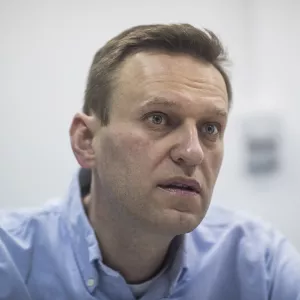
Politicians
1976-06-04
Умер(ла)
Kirov, Moscow
Посмотреть в базе преследованийBiography
In May 2011, it became known that a criminal case had been opened against him for causing property damage by deception to Kirovles. On 10 April 2012, the case was dismissed for lack of corpus delicti, but was reopened on 29 May 2012 by order of the leadership of the Russian Investigative Committee. According to the investigation, Navalny, together with Pyotr Ofitserov, set up the Vyatskaya Lesnaya Kompaniya (Vyatka Forest Company), which purchased timber products from Kirovles at understated prices and then sold them to consumers at market prices. The defence argued that the purchase from Kirovles was made at
In May 2011, it became known that a criminal case had been opened against him for causing property damage by deception to Kirovles. On 10 April 2012, the case was dismissed for lack of corpus delicti, but was reopened on 29 May 2012 by order of the leadership of the Russian Investigative Committee. According to the investigation, Navalny, together with Pyotr Ofitserov, set up the Vyatskaya Lesnaya Kompaniya (Vyatka Forest Company), which purchased timber products from Kirovles at understated prices and then sold them to consumers at market prices. The defence argued that the purchase from Kirovles was made at market prices. On 18 July 2013, the Leninsky District Court of Kirov sentenced Navalny and Ofitserov to five years in prison. The convicts were taken into custody in the courtroom, but spent less than a day in the pre-trial detention centre - the next day the court, on the proposal of the prosecutor's office, ruled to release Navalny and Ofitserov on their own recognisance until the verdict enters into legal force. This was preceded by mass protests in various Russian cities. On 16 October 2013, the Kirov Regional Court replaced Navalny and Ofitserov's real sentences with suspended sentences.
In November 2016, the Supreme Court cancelled the verdict due to the decision of the European Court of Human Rights, which recognised the prosecution as groundless. The Leninsky Court of Kirov began to re-examine the case. After Navalny announced his intention to run for president, the court began to hold sessions in a more intensive mode. On 1 February 2017, the court elected Navalny a measure of restraint in the form of a order not to leave. On 8 February, Navalny was sentenced to a five-year suspended sentence.
On 14 December 2012, information appeared about the initiation of a case against Alexei Navalny and his brother Oleg on fraud and legalisation of funds to the detriment of the Russian division of the company "Yves Rocher". According to the investigation, the Navalny's stole more than 26 million roubles from "Yves Rocher Vostok" and more than 4 million roubles from "Multiprofile Processing Company" through fraud. According to the latest information, Yves Rocher submitted a report to the Investigative Committee back in February 2013, stating that no damage had been done to the company. Alexei Navalny was on a order not to leave on charges in this case, but after his detention on 24 February 2014 and arrest on the trail of a mass event in support of those convicted in the "Bolotnaya case" on Tverskaya Street, the Basmanny court changed his preventive measure to house arrest. On 24 April, the Zamoskvoretsky court held preliminary hearings on the case. On 28 April, the court returned the case to the prosecutor's office, having satisfied the motion of the lawyers who found numerous violations in it. On 30 December 2014, the charge was partially reclassified, from simple fraud to business fraud. Navalny was sentenced to three and a half years' suspended imprisonment. On 17 February 2015, the sentence was left unchanged - Navalny was only exempted from paying a 500,000 fine.
On 10 April 2014, a libel case was brought against Navalny on the claim of Alexey Lisovenko, a municipal deputy of the Babushkinsky district of Moscow. The deputy was called a drug addict in Navalny's tweet after the deputy himself said that Navalny continued to tweet despite the fact that, being under house arrest, he had no right to do so. Lisovenko demanded that Navalny be sentenced to community service. On 22 April, a magistrate judge found Navalny guilty, although there was no evidence that Navalny had tweeted the relevant message, and sentenced him to a fine of 300,000 rubles.
On 24 April 2014, the Lyublinsky Court, represented by Judge Anna Zotko, ruled on a civil suit against Navalny by Sergei Neverov, a Duma deputy from United Russia, for protection of honour and dignity. Neverov demanded a refutation of information spread by Navalny about undeclared dacha plots belonging to the deputy. The court ruled that Navalny must publish a refutation on the Internet within ten days, despite the fact that Navalny is under house arrest and has no right to use the Internet.
In May 2016, a libel case was filed against Navalny against former policeman Pavel Karpov: the politician was accused of publishing videos accusing Karpov of crimes, including his involvement in the murder of lawyer Sergei Magnitsky.
In June 2020, a libel case was filed against Navalny against Ignat Artemenko, a World War II veteran who took part in the recording of a video in support of constitutional amendments. A signature of non-deportation was taken.
On 20 August Navalny became ill on a plane flying from Tomsk to Moscow. The plane made an emergency landing in Omsk, where he was taken to an emergency hospital. According to reports from the politician's supporters and loved ones, plainclothes operatives were on the hospital grounds. Navalny's relatives are convinced that he was poisoned. After long negotiations, Navalny's relatives managed to get him transferred to the German clinic Charité on 22 August. Two days later, representatives of the clinic announced that they had found signs of the Novichok chemical warfare agent in his body. In October, the Organisation for the Prohibition of Chemical Weapons (OPCW) confirmed the presence of traces of Novichok poison in Navalny's tests. The politician spent about two weeks in a coma. In December, the Bellingcat research group together with The Insider published the results of an investigation into the possible involvement of FSB officers in Navalny's poisoning.
On 29 December, it became known that a fraud case had been opened against Navalny: he was accused of spending for personal purposes most of the money transferred to him as donations.
On 12 January 2021, the Federal Penitentiary Service demanded that Navalny's suspended sentence in the Yves Rocher case be replaced with a real one. On 17 January, when Navalny flew to Russia, he was detained at Sheremetyevo airport while going through passport control. The next day, the court sent Navalny to custody for 30 days at an on-site session at a police station in Khimki near Moscow. On 2 February, the court satisfied the request of the Federal Penitentiary Service.
On 20 February, Navalny was sentenced to a fine of 850 thousand rubles in the case of defamation of a veteran.
In April, it became known that Navalny was prosecuted for creating a non-profit organisation that infringes on the personality and rights of citizens. The case was initiated back in February.
On 25 May it became known that Navalny was prosecuted for insulting justice of the peace Vera Akimova, who delivered a verdict in the case of defamation of a veteran.
On 22 March 2022, Navalny was sentenced to nine years of strict regime and a fine of 1.2 million rubles in a case of fraud and contempt of court.
In September 2021, it became known that a case was opened against Navalny and his supporters for the activities of an extremist community. In October, it was reported that this case was merged with the cases of financing extremist activities, legalisation of money acquired by others through criminal means, involvement of minors in dangerous activities, as well as with the above-mentioned case of establishing a non-profit organisation infringing on the personality and rights of citizens. Later it became known that Navalny was also charged with calls for extremist activity and rehabilitation of Nazism - because of statements and actions that had previously given rise to cases against other people.
On 4 August 2023, Navalny was sentenced to 19 years in a special regime colony. This was made possible because the court, which ruled on the fraud case in March 2022, changed the sentence in the Kirovles case from suspended to real.
On 27 September 2023, Navalny was transferred to a single cell-type facility for a year.
During his time in the colony Navalny was sent to the punishment cell at least 27 times.
In December, Navalny's support group reported that his lawyers had already been denied access to him several times, and that he had already been prevented from attending court hearings on his claims against the colony administration via video link several times, explaining this by electricity problems. The situation is aggravated by the fact that shortly before Navalny became ill in his cell. On 25 December, it became known that Navalny was transferred to a colony in the Yamalo-Nenets district (before that he was in the Vladimir region). Already in January 2024, he was again sent to a punishment cell.
In detention, the politician experienced various health problems. At the end of March 2021, Alexei Navalny went on hunger strike in the colony because a doctor was not allowed to visit him. Then he complained of severe back pain, numbness in his leg, because of the pain he could not step on his foot. But, according to the lawyer, he was brought only two ibuprofen tablets from the prison sanitary unit. In April 2023, Alexei Navalny's lawyer reported that he was called an ambulance because of an aggravated stomach ailment. In November 2023, Navalny reported that he was prevented from visiting a dentist outside the colony to have his teeth examined and prophylactically cleaned. In January 2023, Navalny became very ill in the SHIZO. He had a high temperature, cough and fever; no transfer of medication or hospitalisation was allowed.
On 16 February 2024, the FSIN Directorate reported Navalny's death in the colony. The next day this information was also confirmed by the politician's supporters.