
 Search


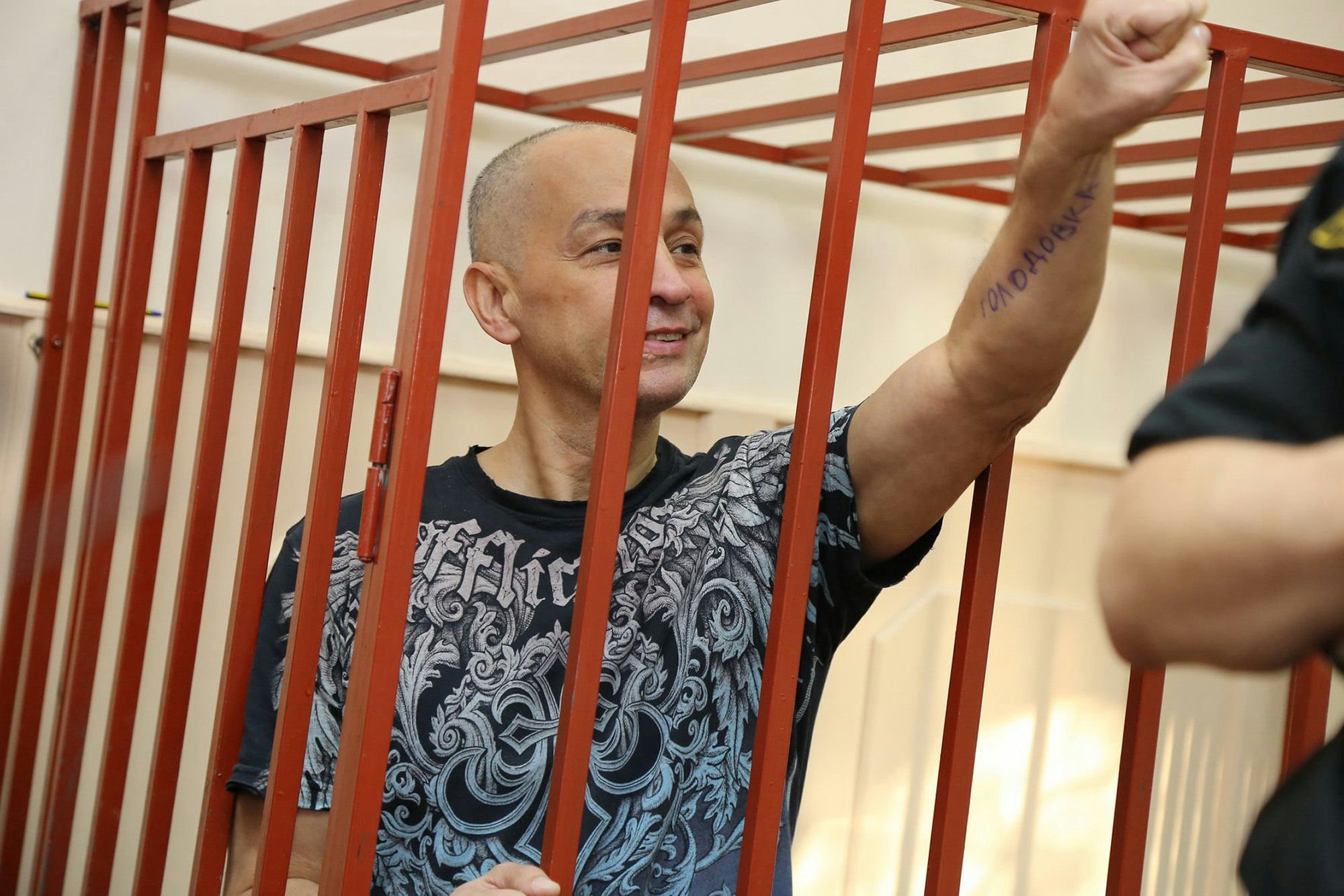 Alexander Shestun at the Basmanny District Court during his hunger strike, 2018 / Photo: Alexander Shestun’s Twitter
 Former head of the Serpukhov district near Moscow, Aleksandr Shestun was detained in June 2018 on charges of abuse of office. According to investigators, he illegally transferred a plot of land to a legal entity at a preferential price.
Shestun often clashed with high-ranking members of the security forces and officials, as well as supporting protest actions. Shortly before his arrest, the politician made public his conflict with the governor of the Moscow region, Andrey Vorobyov, and published audio recordings of secret meetings and threats against him from Andrey Yarin, head of the presidential administration’s domestic policy directorate; Mikhail Kuznetsov, head of the Moscow regional administration; and Ivan Tkachev, head of the Economic Security Service’s “K” Directorate of the FSB.
In December 2020, Shestun was sentenced to 15 years in a high-security penal colony. He was found guilty of large-scale fraud, money laundering of criminal proceeds, illegal entrepreneurship, and receiving large-scale bribes.
In April 2021, a new criminal case was opened against Shestun under three new articles: threat or violent actions in connection with the administration of justice, contempt of court, and insulting a representative of authority. In August, he was sentenced to a further six months in a high-security colony.
The human rights project “Support for Political Prisoners. Memorial” considers the prosecution of the former Serpukhov district head to be politically motivated, recognises him as a political prisoner, and demands a retrial.
While incarcerated, Shestun repeatedly went on hunger strike, which severely damaged his health. During his second hunger strike in 2019, he experienced clinical death. Announcing his third, the politician stated that his case was the result of revenge by prosecutors and the FSB, and cut his hand with a piece of razor blade. He carried out similar acts of protest several more times; the longest of them lasted 200 days, with only brief interruptions.
In 2021, the European Court of Human Rights ruled the extension of Shestun’s detention and the duration of his time in pre-trial detention unlawful, awarding him €4,400 in compensation.
In November 2022, the court ordered the eviction from two houses of the politician’s 86-year-old mother, his wife, and two underage children. On 10 July 2023, the family had to leave their home.