In mid-March, more than 1,500 TikTok videos appeared calling for protests against internet censorship. The action, scheduled for 29 March, is being promoted by the “Scarlet Swan” movement—reportedly organised by young people aged 14 to 20 (there are suspicions they may be linked to pro-government groups). Coordinators submitted an application for a rally in Moscow, and in parallel the politician Dmitry Kisiev announced actions across Russia. His team submitted notifications in 28 cities across 17 regions in total.
Authorities in Russian cities are refusing to allow these rallies, canceling already approved actions, and also putting pressure on their organisers and participants.
- Police visited Sofia Chepik (19), administrator of the Moscow “Scarlet Swan” chat: they took her from her home, held a “preventive conversation,” and released her with a “warning about the inadmissibility of breaking the law.”
- Main organiser Stepan Razin went to the prosecutor’s office himself to pre-empt action by the security forces (however, a police unit also turned up at his home during this time).
- In Rostov-on-Don, a major city in southern Russia, rally applicant Yevgeny Makovoz was arrested for 10 days. Before this, there was a search at his home during which he was beaten. According to his relatives, the activist suffered a concussion.
Why are protests against internet censorship not allowed in Russian cities? The authorities’ explanations
- Moscow and Moscow region. Mass events are banned due to COVID restrictions.
- Barnaul and Petropavlovsk-Kamchatsky. The rally’s aim “violates the principle of legality” because Roskomnadzor is blocking the internet “within the powers granted by law.”
- Kazan. The wording of the aim “allows for arbitrary and ambiguous interpretation.”
- Volgograd. There is a threat of drone attacks.
- Voronezh. There is a threat of terrorist attacks.
- Tomsk. All 15 proposed venues for the action are already booked.
- Vladivostok. The action can only be held at one venue, but it needs repairs.
In some cities, rallies can still be agreed, but with caveats:
In Vladimir, the rally was approved—but only for one hour in the morning. Initially, organisers wanted to protest at ten venues, but the authorities decided to clean them and hold a “patriotic event” there. In Yakutsk, a major city in Siberia, a venue on the outskirts was approved. Authorities also demanded that the rally be moved to Monday and last only one hour. The organiser called this “mockery” and declined.

 Search


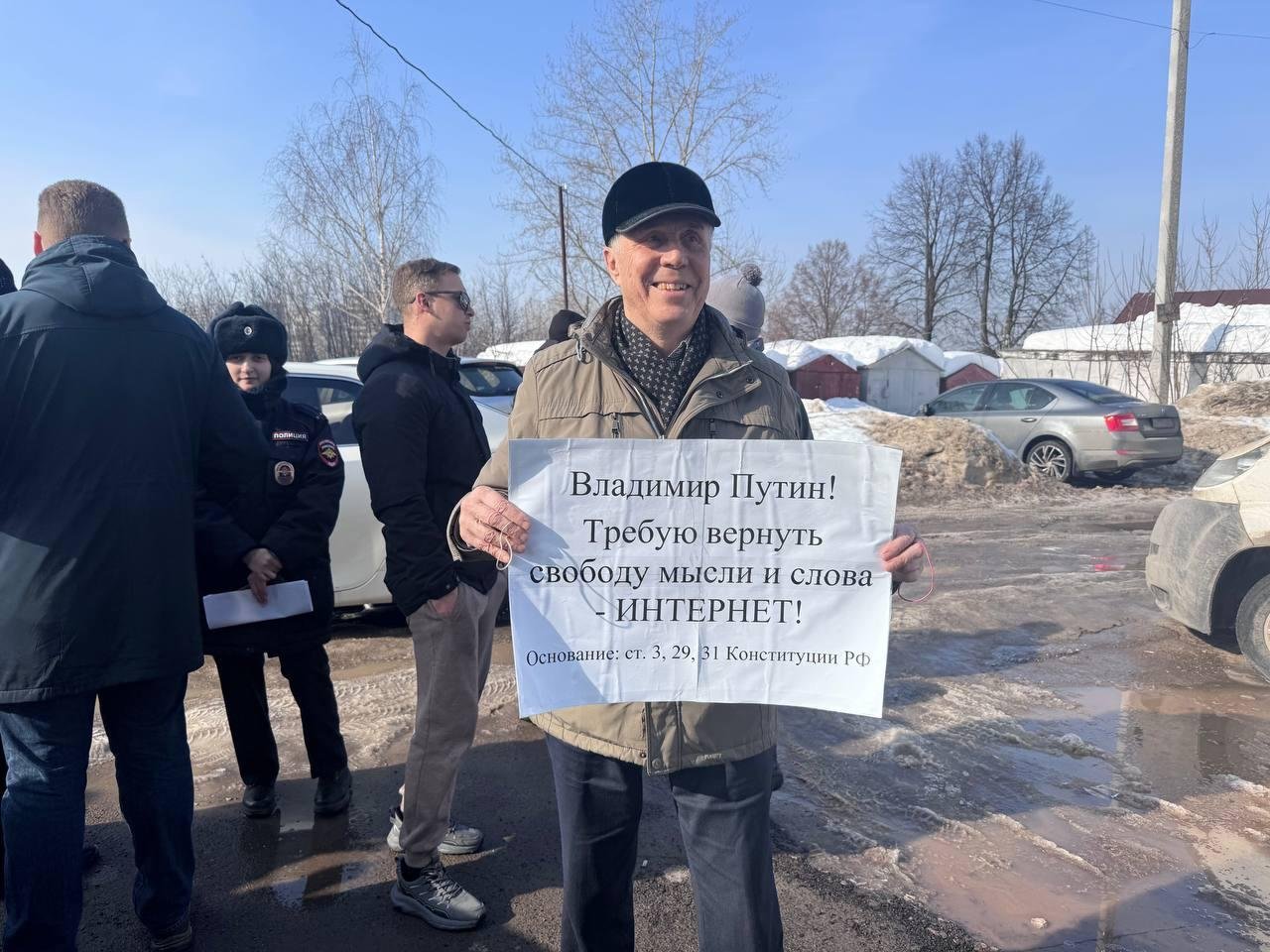 Viktor Gilin’s solo protest in Perm / Photo from the Telegram channel of the Perm branch of the “Rassvet” party